Experience
Sewage Overflow Cleanup in San Francisco
Sewage overflows present immediate health and property risks: contaminated water can spread pathogens, damage building materials, and create lingering odors and mold conditions. Sewage Overflow Cleanup removes contaminated materials, restores sanitary conditions, and reduces the risk of secondary problems such as mold growth or structural deterioration. If you need Emergency Sewage Cleanup, Sanitation and Decontamination Services in San Francisco, CA, a trained team will assess contamination, contain the area, remove sewage and affected materials, perform targeted cleaning and disinfection, and verify that moisture and contamination levels are under control.
What does Sewage Overflow Cleanup involve in San Francisco, CA?
Sewage Overflow Cleanup involves identifying contamination, removing sewage and porous materials that cannot be safely cleaned, cleaning and disinfecting remaining surfaces, and drying the area to prevent mold. Professionals separate sewage-contaminated “black water” from less hazardous liquids, then use containment, PPE, and specialized equipment to limit cross-contamination during the cleanup.
This work often includes emergency pumping, removal of contaminated flooring and insulation, HEPA vacuuming of dust and residues, and application of EPA-registered disinfectants where appropriate. Technicians usually document conditions for insurance and follow recognized remediation protocols to restore safe occupancy conditions.
Who needs Emergency Sewage Cleanup, Sanitation and Decontamination Services?
Homeowners, landlords, property managers, businesses, and public facilities need these services when raw sewage appears inside a property or when sanitary systems overflow onto occupied spaces. People should call professionals when sewage contacts living areas, HVAC systems, or stored goods.
Professionals are also appropriate for complex commercial settings where contamination can affect operations or regulatory compliance. In all cases, the presence of black water (sewage) or unknown contaminants warrants a professional response rather than DIY cleanup.
When should you schedule Sewage Overflow Cleanup in San Francisco, CA?
Schedule cleanup as soon as it is safe to do so and after immediate hazards have been controlled; early action reduces health risk and limits secondary damage. If sewage is inside a structure, rapid removal and drying often prevent microbial amplification and material degradation.
Emergency Sewage Cleanup is appropriate 24/7 in many cases because sewage is a direct health hazard. Professionals can advise on temporary containment, shutoffs, and safe access while awaiting on-site work.
How does the Sewage Overflow Cleanup process work?
A professional Sewage Overflow Cleanup generally follows these steps: 1. Initial contact and triage to determine urgency and safety. 2. On-site assessment and scope identification, including water classification and affected materials. 3. Containment setup to limit spread of contaminants. 4. Removal of bulk sewage and extraction of contaminated water. 5. Cleaning, sanitation, and decontamination of surfaces and systems. 6. Drying and moisture control using mechanical drying equipment. 7. Final inspection, documentation, and recommendations for repairs or monitoring. 8. Follow-up or maintenance if needed, such as rechecks for moisture or mold.
Each step adapts to property conditions and the contamination extent. Professionals document the work with photographs and logs to support insurance claims and future maintenance.
What factors affect Sewage Overflow Cleanup scope and timeline?
The cleanup scope and timeline often depend on the type of water, the volume of sewage, affected materials, and accessibility. Black water (raw sewage) increases the need to remove porous materials such as drywall and carpet, which lengthens the project.
Other influencing factors include whether sewage reached HVAC or electrical systems, the building’s construction, and weather conditions that affect drying. Property decisions—like whether to replace or attempt to disinfect materials—also change time and cost estimates.
What equipment and materials are commonly used?
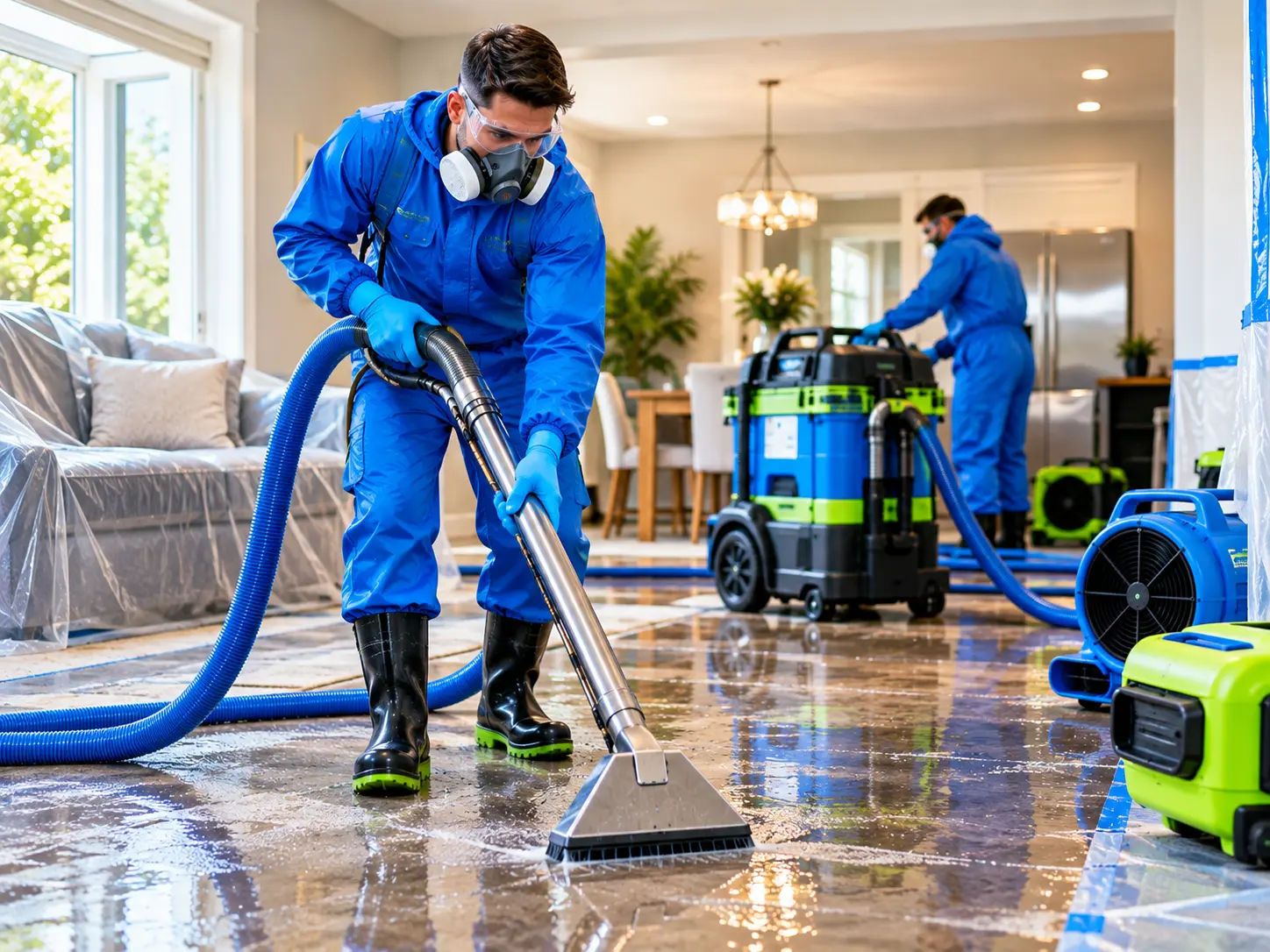
Professionals commonly use: - Submersible pumps and wet vacs for bulk water removal. - Air movers, dehumidifiers, and negative-air machines for controlled drying. - HEPA-filter vacuums to remove particulates and bioaerosols. - EPA-registered disinfectants and detergents suitable for sewage contamination. - Personal protective equipment (PPE) including respirators, gloves, coveralls, and eye protection. - Moisture meters and infrared cameras to map hidden moisture. - Containment barriers, polyethylene sheeting, and air scrubbers to manage cross-contamination.
These tools support safe, efficient removal of contaminants and verification that surfaces and cavities are dry and clean.
What safety considerations apply during cleanup?
Safety considerations include avoiding electrical hazards, preventing exposure to pathogens, and controlling air movement that could spread contaminants. Technicians shut off affected circuits when possible and confirm structural stability before entering heavily contaminated areas.
Workers use appropriate PPE and follow decontamination protocols to avoid cross-contaminating clean zones. Confined spaces, strong odors, and chemical hazards may require additional precautions or specialized contractors.
What should customers expect from Sewage Overflow Cleanup in San Francisco, CA?
Customers should expect an initial assessment that identifies contamination type, visible damage, and potential affected systems. The provider will explain which materials are salvageable and which require removal, and outline a written scope or estimate.
During remediation, expect containment barriers, equipment in work areas, and restricted access to affected rooms. After work completion, the provider should offer documentation of the cleaning and drying results and practical recommendations for repairs, replacement of materials, and monitoring.
How do professionals verify sanitation and decontamination?
Professionals verify sanitation through a combination of visual inspection, moisture measurement, and targeted testing as needed. Moisture meters and hygrometers confirm that materials and cavities are within acceptable dryness ranges to prevent mold growth.
In some situations, technicians use surface sampling or ATP (adenosine triphosphate) testing to confirm organic residue removal, but interpretations vary and sampling is selected based on the project goals. Visual and mechanical evidence of drying combined with documented cleaning protocols usually supports safe reoccupancy.
What items are typically salvageable after sewage overflow?
Non-porous items—such as metal fixtures, hard-surface furniture, and sealed cabinetry—are often salvageable after proper cleaning and disinfection. Porous materials like carpet padding, upholstered furniture, particleboard, and insulation commonly require removal when contaminated by sewage.
Personal items may be salvageable if they can be laundered or professionally cleaned; however, irreversible staining or odors can make restoration impractical. Professionals will inventory affected contents and advise on salvageability based on contamination level and material type.
What role do building systems play in cleanup?
Building systems can spread contamination if sewage enters HVAC ducts, electrical compartments, or concealed wall cavities. When such systems are involved, technicians include HVAC sanitization, duct cleaning, and targeted demolition of contaminated assemblies.
Coordination with mechanical, plumbing, and electrical contractors may be necessary to restore system functionality safely. Professionals will isolate affected systems and, where required, recommend further testing or system component replacement.
What local considerations apply to Sewage Overflow Cleanup in San Francisco, CA?
Local service requirements in San Francisco, CA include timely response and safe disposal of contaminated materials according to municipal waste rules and transportation requirements. Professionals familiar with local disposal options can arrange for removal of sewage solids and contaminated debris.
Customers should confirm any local permitting or reporting that may be required for significant sewer backups or commercial facility incidents. A provider with knowledge of local disposal channels can reduce delays in completing the remediation.
How should you prepare before the crew arrives?
Prepare by turning off electricity to affected areas if safe and feasible, and by keeping people and pets away from contaminated zones. Document visible damage with photos for insurance; do not attempt deep cleaning of sewage-impacted areas yourself, as improper cleaning can spread contamination.
Provide access to water and a clear path for equipment if possible. If contents have been moved to a safe area, make a list of what was removed and where it was relocated to assist the team with salvage decisions.
What questions should you ask a Sewage Overflow Cleanup provider?
Ask the provider to explain the following before work starts: - How they classify the water and what that means for removal. - Steps they will take for containment, cleaning, and drying. - Which materials they expect to remove versus clean. - How they handle disposal of contaminated materials and documentation for insurance. - What safety measures and PPE will be used on site. - Whether they coordinate with plumbers, HVAC, or structural contractors. - How they verify that the space is dry and sanitary after work.
Collecting this information will let you compare providers on process and transparency rather than price alone.
What are typical cost-influencing factors?
Cost can vary widely and often depends on: - Volume of sewage and extent of contamination. - Classification of water (black water requires more removal). - Square footage and number of affected rooms. - Degree of demolition and reconstruction required. - Accessibility of the affected areas and whether special equipment is needed. - Disposal requirements and local disposal fees. - Required coordination with other trades (plumbing, HVAC, structural).
Professionals usually provide an itemized estimate reflecting these variables rather than a flat rate.
When is professional assistance clearly necessary?
Professional assistance is necessary when sewage contaminates living areas, HVAC systems, or when porous building materials are affected. Professionals are also needed if the event impacts structural components or when occupants include vulnerable individuals such as children, elderly, or immunocompromised people.
If you are unsure about the severity, call a qualified provider to assess the situation; their initial assessment helps determine the urgency and scope.
How long does Sewage Overflow Cleanup usually take?
Duration often depends on contamination extent, drying requirements, and repair work needed. Bulk sewage removal and initial cleaning may take hours to a day, but full drying and reconstruction can extend to several days or weeks.
Moisture-driven processes determine much of the timeline: drying walls, floors, and cavities to acceptable levels may require multiple days of mechanical drying and monitoring.
What maintenance may follow cleanup?
After remediation, maintenance may include replacing removed materials (drywall, carpet, insulation), repairing plumbing defects, and monitoring for signs of mold growth. Regular plumbing inspections and clearing of drains can reduce the risk of repeat incidents.
Document the remediation work and maintain any warranties or records for insurance and future property transfers.
How does Sewage Overflow Cleanup relate to mold prevention?
Timely removal of sewage and effective drying greatly reduce the risk of mold that often thrives on damp, organic materials. Professionals focus on both decontamination and moisture control; addressing only one aspect increases the chance of later mold growth.
If mold is already visible or suspected in hidden cavities, technicians may include mold remediation steps or recommend a specialized mold assessor to define an appropriate plan.
What safety tips apply to homeowners before professionals arrive?
Do not enter contaminated areas without protective gear, and avoid contact with sewage. Turn off HVAC systems to minimize air circulation from contaminated zones, and avoid running fans that could spread airborne contaminants.
If sewage has reached electrical outlets or appliances, do not touch them and disconnect power at the main breaker if safe to do so. Call a professional to evaluate electrical hazards.
How does insurance typically interact with Sewage Overflow Cleanup?
Insurance response varies by policy and cause. Document damage with photos and keep damaged items until an adjuster reviews them, unless they pose a health risk. Provide the insurer with the professional remediation scope and invoices to support claims.
Providers can often work with insurance adjusters and provide documentation, but customers should confirm coverage details and whether pre-approval is required before work begins.
Call to action
If you are dealing with a sewage overflow and need Emergency Sewage Cleanup, Sanitation and Decontamination Services in San Francisco, CA, contact the team about your Sewage Overflow Cleanup needs at (888) 679-3880. A professional can advise next steps and schedule an on-site assessment.
FAQ
Q: How soon after sewage contact can a home be reoccupied? A: Occupancy depends on the extent of contamination and verification that surfaces are disinfected and moisture levels are acceptable. Professionals assess safety for reentry and provide written confirmation when areas meet sanitary and dryness criteria.
Q: What documentation should I collect for an insurance claim after sewage overflow? A: Collect dated photos of damage, a list of damaged items, receipts for emergency purchases, and a detailed remediation estimate or invoice. Keep copies of communication with any contractors and the insurer to support the claim process.
Q: Are personal items like clothing and documents always unsalvageable? A: Not always. Clothing that can be laundered at high temperatures or professionally cleaned may be salvageable. Paper documents that are water-damaged may sometimes be freeze-dried or freeze-restored by specialists; salvageability often depends on contamination type and how quickly items were retrieved.
Q: Can routine plumbing maintenance prevent sewage overflows? A: Regular plumbing inspections and clearing of build-up can reduce some causes of backups, but blockages, municipal system failures, or extreme weather events may still cause overflows. Maintenance lowers risk but does not remove it entirely.
Q: What are signs of hidden contamination after a sewage event? A: Lingering foul odors, discolored baseboards, persistent dampness, or mold growth in concealed cavities can indicate hidden contamination. Professionals use moisture meters and cavity probes to locate affected areas that require remediation.
Q: Who should I call first: a plumber or a cleanup team? A: Call whoever addresses the immediate hazard first. If sewage is actively flowing, a plumber may be needed to stop the source. If contamination has already occurred inside the building, a cleanup team can begin containment and remediation. Many situations require both trades working together.
Q: Will decontamination remove odors completely? A: Proper removal of contaminated materials, cleaning, and thorough drying often eliminate the sources of odors. In some cases, odor molecules penetrate materials that must be replaced. Professionals assess whether additional odor-control measures or material replacement are necessary.
Q: How do technicians handle disposal of contaminated materials in San Francisco, CA? A: Technicians coordinate removal and disposal according to local waste handling practices and regulations. Disposal typically involves sealed containment and transport to facilities equipped to receive biohazardous or sewage-contaminated debris.
Q: When should I be concerned about structural damage from sewage? A: Concern is warranted when sewage has soaked structural components like studs, joists, or subflooring for extended periods. Prompt professional assessment can identify load-bearing material compromise and recommend repair or replacement.
Q: Can recurring sewage backups indicate a larger municipal issue? A: Recurring backups may originate from private plumbing, sewer lateral issues, or municipal system problems. Documentation of patterns and coordination with a plumber and local utility can help determine responsibility and next steps.
Contact the team about your Sewage Overflow Cleanup needs and emergency sanitation planning in San Francisco, CA at (888) 679-3880. Documentation, professional containment, and targeted decontamination reduce health risks and limit long-term property damage. [End of Article]
Quality Assurance
We guarantee exceptional sewage overflow cleanup results with every project.
Prompt Service
On-time service delivery with attention to every detail.